Abhishek Sharma’s Meteoric Rise, IPL to International Star
202516+
Abhishek Sharma’s Meteoric Rise: From IPL Standout to International Star In the world of cricket, where talent is as abundant as the passion for the game in India, Abhishek Sharma has emerged not just as a name but as a phenomenon. Born on September 4, 2000, in Amritsar, Punjab, Sharma’s journey from domestic circuits to […]
Abhishek Sharma’s Meteoric Rise: From IPL Standout to International Star
In the world of cricket, where talent is as abundant as the passion for the game in India, Abhishek Sharma has emerged not just as a name but as a phenomenon. Born on September 4, 2000, in Amritsar, Punjab, Sharma’s journey from domestic circuits to the international arena has been nothing short of a fairy tale. His recent performance in the T20I against England at Eden Gardens has not only put him in the spotlight but has also sparked conversations about the future of Indian cricket.
The Early Days
Abhishek Sharma’s cricketing journey began under the guidance of his father, Raj Kumar Sharma, a former cricketer, who nurtured his son’s talent from a very young age. His cricketing prowess was first noticed in the Under-19 levels, where he led India to victory in the 2016 U-19 Asia Cup and was a key player in the 2018 U-19 World Cup-winning team. His ability to bat aggressively and bowl useful left-arm spin marked him as a versatile all-rounder.
IPL: The Launchpad
The Indian Premier League (IPL) served as the perfect stage for Sharma to showcase his skills to a broader audience. Making his IPL debut for Delhi Daredevils (now Delhi Capitals) in 2018, he quickly made an impression with a 19-ball 46 on debut. However, it was after joining Sunrisers Hyderabad in 2019 that his career truly took off. His standout season came in 2024 when he scored 484 runs at a strike rate of over 200, including the fastest fifty for SRH in that season, signaling his arrival as a genuine T20 match-winner.
Key IPL Statistics:
Matches Played: 63
Runs Scored: 1235
Highest Score: 75
Strike Rate: 146.28
Wickets: 11
The International Breakthrough
The transition to international cricket can be daunting, but Sharma’s recent performance in the T20I against England has been nothing short of spectacular. Scoring a brisk 79 off just 34 balls, including 8 boundaries and 4 sixes, he was instrumental in India’s chase, earning him the Player of the Match. This innings wasn’t just about the runs; it was a statement of intent, showcasing his ability to dominate world-class bowling on an international stage.
International Stats (as of the last match):
Matches: 2
Runs: 103
Average: 51.50
Strike Rate: 187.27
Highest Score: 79
The Future in Focus
Cricket analysts and former players have been quick to praise Sharma’s potential. His mentor, Yuvraj Singh, has been vocal about his belief in Sharma’s capabilities, emphasizing his work ethic and adaptability.
Rahul Dravid (Head Coach, Indian Cricket Team): “Abhishek has shown that he can handle pressure at the highest level. His fearless approach is what we need in T20 cricket.”
Irfan Pathan (Former Indian Cricketer): “His ability to switch gears and his power-hitting make him a valuable asset for any format, especially T20s.”
Looking ahead, the challenge for Sharma will be consistency and adaptation to different conditions and formats. His all-round abilities give him a unique edge, but the test will be in maintaining his performance level across series, particularly in the longer formats if given the opportunity.
Conclusion
Abhishek Sharma’s rise in cricket is a narrative of talent meeting opportunity, of hard work translating into spectacular performances. As he continues to grow, the cricketing world watches with bated breath, eager to see how far this young star can soar. For now, Sharma has not only made a mark but has also set the stage for a promising career, proving that he’s not just a flash in the pan but a potential legend in the making.
IND vs ENG 1st T20I Live: Skyball vs Bazball Clash at Eden Gardens
Welcome to the electrifying showdown at Kolkata’s iconic Eden Gardens, where Team India takes on England in the first T20I of a thrilling five-match series. It’s not just cricket; it’s a battle of philosophies – India’s ‘Skyball’ versus England’s ‘Bazball’. Here’s everything you need to know about this high-octane match.
Match Overview
Date: January 22, 2025
Venue: Eden Gardens, Kolkata
Toss: India won the toss and elected to bowl first.
England: Phil Salt (wk), Ben Duckett, Jos Buttler (c), Harry Brook, Liam Livingstone, Jacob Bethell, Jamie Overton, Gus Atkinson, Jofra Archer, Adil Rashid, Mark Wood.
Score and Updates
Innings 1: England
England’s Innings: They managed to post a total of 132 runs, with Jos Buttler being the standout performer with 68 off 44 balls. However, India’s bowlers, particularly Varun Chakravarthy (3/23), kept England in check.
Innings 2: India
India’s Chase: The chase was led by a phenomenal performance from Abhishek Sharma, who scored an explosive 79 off just 34 balls, ensuring India chased down the target in just 12.5 overs, winning by 7 wickets.
Key Highlights:
Arshdeep Singh set the tone early, dismissing Phil Salt for a duck and Ben Duckett for 7 in the powerplay.
Varun Chakravarthy was the pick of the bowlers, bamboozling England’s middle order with his spin.
Abhishek Sharma‘s innings was the highlight, showcasing why he’s a rising star in Indian cricket with his aggressive play.
Player of the Match
Abhishek Sharma for his match-winning knock that not only clinched the game but did so in style, reminding everyone of his potential
India has taken a 1-0 lead in the series, setting the stage for an exciting battle ahead. The next match is scheduled in Chennai, where both teams will look to either consolidate or bounce back. The series promises more action, more sixes, and more of the Skyball vs Bazball spectacle.
Analysis
Skyball vs Bazball
Skyball: Characterized by India’s new-age aggressive batting, exemplified by players like Abhishek Sharma, who are not afraid to take the attack to the opposition from the get-go.
Bazball: England’s approach, led by Jos Buttler, focuses on unrelenting aggression, regardless of the situation, which was evident in Buttler’s innings but couldn’t overcome India’s bowling strategy today.
Pitch and Weather
The pitch at Eden Gardens offered bounce and pace, ideal for batting, but India’s bowlers adapted well. The weather was cooperative, with no interruptions, allowing for a full, entertaining match.
Conclusion
The first T20I was a testament to the evolving nature of cricket, where aggressive batting meets strategic bowling. India’s victory has set the tone for a series that promises to keep fans on the edge of their seats. Stay tuned for more live updates, analyses, and the next chapter of this enthralling series.
In a horrifying incident that has shocked Hyderabad, a man has confessed to the brutal murder of his wife, followed by an attempt to dispose of her body in one of the most gruesome ways imaginable. This case, emerging from the city known for its tech prowess and cultural heritage, has cast a shadow over the community, prompting discussions on domestic violence, mental health, and the darker aspects of human nature.
Gruesome Act: The man, identified as a former serviceman now working in security, allegedly killed his wife in a fit of rage, then proceeded to dismember her body. In an attempt to erase evidence, he is said to have cooked some of the body parts in a pressure cooker, a method chillingly reminiscent of other high-profile crimes in India.
Discovery and Confession: The crime came to light when the wife was reported missing by her family, leading to police investigations that culminated in the man’s confession. The police are now verifying his claims, with no body parts found yet, adding a layer of mystery and urgency to the case.
Context and Motive
Domestic Strife: Reports suggest that the couple had been dealing with frequent arguments. The woman’s desire to visit her native place reportedly escalated tensions, culminating in the fatal confrontation.
Mental State: While the motive seems tied to domestic discord, questions about the mental state of the accused are likely to be part of the ongoing investigation.
Immediate Aftermath
Police Action: The accused has been taken into custody, with a murder case registered against him. The police are conducting a thorough investigation, including searching for the remains and piecing together the timeline of events.
Community Reaction: The incident has left the local community in shock, with many expressing fears over safety and the hidden tensions within domestic settings.
Broader Implications
Societal Reflection
Domestic Violence: This case brings to the forefront the issue of domestic violence, urging society to look into mechanisms for early intervention, support for victims, and rehabilitation for perpetrators.
Mental Health: There’s a growing conversation about the need for better mental health resources, especially for those in high-stress or post-military life, where such drastic actions might stem from unresolved trauma or psychological distress.
Legal and Ethical Considerations
Justice System: The legal system now faces the challenge of ensuring justice while dealing with the complexities of such a case, including the mental health evaluation of the accused.
Public Safety: It raises questions about how communities can better safeguard against such extreme acts of violence, prompting discussions on policing, community watch, and the role of neighbors in noticing and reporting signs of trouble.
Conclusion
The Hyderabad incident is a grim reminder of the potential for violence within the sanctity of one’s home. It underscores the importance of vigilance, support systems for those in abusive situations, and the critical role of mental health in preventing such tragedies. As the investigation unfolds, the community and the nation watch, hoping for justice for the victim and measures to prevent future horrors.
Jalgaon Train Accident: Visibility and Braking Challenges
In a tragic turn of events near Jalgaon, Maharashtra, a devastating train accident unfolded, highlighting critical issues with railway safety due to track curvature and visibility. Here’s an in-depth look at what happened, the factors involved, and the implications for future railway safety measures.
The Incident
On a fateful day in Jalgaon, passengers of the Pushpak Express, misled by rumors of a fire, leapt onto the tracks, only to be struck by the oncoming Karnataka Express on an adjacent track. This incident, which occurred between Maheji and Pardhade stations, resulted in numerous casualties, shaking the local community and prompting a swift investigation into the circumstances surrounding the tragedy.
Key Factors in the Accident
Track Curvature and Visibility
Obstructed View: According to railway officials, the curvature of the track played a significant role in the accident. The bend in the track near the incident site reportedly obstructed the visibility for the driver of the Karnataka Express, reducing the time to react to the people on the tracks.
Emergency Signals: Although the Pushpak Express had its flasher lights on, indicating an emergency, the curvature limited the effectiveness of this signal, further complicating the situation for the Karnataka Express driver.
Braking Distance
Insufficient Stopping Distance: The sudden appearance of people on the track meant there was little to no chance for the Karnataka Express to brake in time. The high speed at which trains travel and the natural limitations of braking systems on curved tracks exacerbated the tragedy.
Driver’s Reaction: Reports suggest that despite the driver’s attempt to apply brakes, the combination of speed, visibility issues, and the abruptness of the situation made it nearly impossible to prevent the accident.
Immediate Response and Investigation
Rescue Operations: Local authorities, along with railway staff, quickly mobilized rescue operations, providing medical assistance to the injured.
Official Inquiry: The Commissioner of Railway Safety was tasked with probing the incident, focusing on how visibility and track design contributed to the accident. This investigation aims not only to understand the tragedy but also to prevent future occurrences.
Broader Implications
Safety Enhancements
Track Design Review: This accident has reignited discussions on the need for a thorough review of track designs, especially at curvatures, to ensure better visibility and safety for both passengers and train operators.
Warning Systems: There’s a push for enhancing warning systems, possibly integrating more advanced technologies like automatic track monitoring or alert systems that could inform drivers of obstructions ahead, even around bends.
Public Awareness
Education on Emergencies: There’s a clear need for better public education regarding emergencies on trains, to avoid panic-driven actions like jumping off moving trains.
Communication: Improving communication between trains, perhaps through real-time data sharing about track conditions or emergencies, could be vital in preventing similar accidents.
Conclusion
The Jalgaon train accident serves as a stark reminder of the complexities involved in railway safety, particularly when natural track layouts like curvatures come into play. While the human tragedy is irreplaceable, the lessons learned must lead to actionable changes in how railways manage visibility, braking, and emergency responses. It’s a call to action for railway authorities to re-evaluate and strengthen safety protocols to protect lives on this vast network of transportation.
Mahakumbh: A Spiritual Gathering That Transcends Religion and Unites Humanity
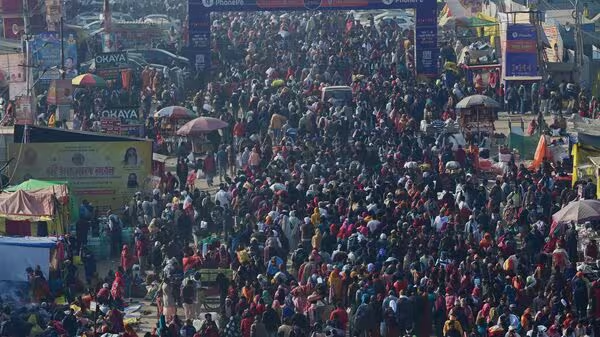
The Mahakumbh Mela, held every 12 years in Prayagraj, is renowned not only as the world’s largest spiritual congregation but also as a profound symbol of unity across diverse faiths and cultures. While rooted in Hindu tradition, Mahakumbh extends its arms to embrace humanity in its entirety, becoming a beacon of spiritual universality. Here’s how this magnificent festival transcends religion to unite people from all walks of life:
A Universal Spiritual Experience
The Essence of Spirituality
Beyond Doctrine: Mahakumbh is less about the specifics of religious doctrine and more about the universal quest for spiritual enlightenment. The act of taking a holy dip in the Ganga is symbolic of cleansing, not just for Hindus but for anyone seeking purity of heart and mind.
Shared Human Spirit: At its core, Mahakumbh celebrates the shared human spirit’s yearning for connection with the divine, peace, and community. This resonates with people of all faiths who recognize the commonality in spiritual pursuits.
Interfaith Participation
Diverse Attendees: It’s not uncommon to see Christians, Muslims, Buddhists, Sikhs, and followers of other paths at Mahakumbh, drawn by curiosity, respect for other cultures, or a personal spiritual quest.
Interfaith Dialogues: The festival often hosts discussions and sessions where leaders from different religions come together, fostering mutual respect and understanding.
Cultural Integration
A Melting Pot of Traditions
Cultural Exchange: Mahakumbh is a vibrant showcase of India’s cultural diversity, including music, dance, art, and cuisine from various regions and communities. This cultural amalgamation invites participation from all, regardless of their religious background.
Global Influence: With attendees from around the globe, Mahakumbh becomes a platform for cultural integration, where international visitors can share their own traditions, enriching the festival’s tapestry.
Education and Learning
Cultural Workshops: Workshops on yoga, meditation, and traditional arts are open to everyone, providing an educational component that transcends religious boundaries, focusing on wellness and cultural appreciation.
Spiritual Discourses: Even if centered on Hindu teachings, these sessions often touch on universal themes like compassion, truth, and the pursuit of knowledge, which are relevant to all humanity.
Unity in Diversity
Breaking Down Barriers
Inclusivity: Mahakumbh’s message of inclusivity is palpable as people from different castes, classes, and countries mingle, share meals, and participate in rituals together, demonstrating that spiritual gatherings can bridge societal divides.
Volunteerism: The festival’s success relies on volunteers from various backgrounds, showcasing how service transcends religious identity to bring people together for a common cause.
A Symbol of Peace
Celebration of Peace: The peaceful nature of Mahakumbh, despite its enormous scale, sends a powerful message about the potential for peace when humanity unites under the banner of spirituality.
Global Message: By hosting such a diverse crowd in harmony, Mahakumbh sends a message to the world about the possibility of coexistence and mutual respect among different faiths and cultures.
Environmental and Social Impact
Sustainable Practices
Universal Responsibility: The push towards making Mahakumbh environmentally sustainable resonates with global concerns, encouraging everyone to participate in conservation efforts, regardless of their faith.
Social Initiatives: The festival also becomes a platform for social initiatives like health camps, education drives, and women’s empowerment, showing how spiritual gatherings can contribute to societal betterment.
Conclusion
Mahakumbh Mela stands as a testament to the idea that spirituality can unite rather than divide. It’s a gathering where the search for the divine, the celebration of life, and the practice of compassion create bonds that go beyond religious labels. For those who attend, Mahakumbh is not just a festival; it’s a living example of how spirituality can foster peace, understanding, and a sense of global community, truly uniting humanity in one of the world’s most profound spiritual experiences.
Mahakumbh 2025: What It Means for Devotees Around the World
Mahakumbh Mela, held every 12 years in Prayagraj, is not just a monumental event for India but holds profound significance for devotees and spiritual seekers from around the globe. The 2025 Mahakumbh, occurring once in 144 years, amplifies this importance, making it a unique opportunity for spiritual renewal, cultural exchange, and global unity. Here’s what this grand event means for the international community of devotees:
Spiritual Significance
A Rare Celestial Alignment
Divine Opportunity: The 2025 Mahakumbh coincides with a rare astrological alignment believed to magnify the spiritual potency of the rituals. Devotees worldwide see this as a once-in-a-lifetime chance for spiritual purification, moksha (liberation), and to receive divine blessings directly from the confluence of Ganga, Yamuna, and the mythical Saraswati.
Global Pilgrimage: For many, Mahakumbh is the ultimate pilgrimage, drawing people from every corner of the world. This event allows devotees to connect with the universal aspects of Hindu spirituality, transcending geographical boundaries.
Cleansing of Sins and Spiritual Growth
Ritual Bathing: The holy dip during Mahakumbh is believed to cleanse one of all sins. For global devotees, this act symbolizes a fresh start, spiritual growth, and a deeper connection to their faith, often leading to significant life changes or spiritual awakenings.
Spiritual Discourses: With revered saints and scholars present, the festival offers a platform for spiritual learning, discourses on Vedic knowledge, and meditation, enriching the spiritual lives of attendees from diverse backgrounds.
Cultural Exchange and Unity
A Melting Pot of Cultures
Cultural Diversity: Mahakumbh attracts not only Hindus but also scholars, researchers, and enthusiasts from various cultures and religions. It becomes a vibrant showcase of art, music, dance, and cuisine, fostering a global dialogue on cultural practices and beliefs.
Unity in Diversity: The festival underscores the principle of unity in diversity. Devotees from around the world bring their unique traditions, which blend with Indian customs, creating a shared spiritual experience that celebrates humanity’s oneness.
Preservation and Sharing of Heritage
Cultural Education: For many international visitors, Mahakumbh serves as an educational journey into India’s spiritual heritage. It’s an opportunity to learn about ancient practices, rituals, and the philosophical underpinnings of Hinduism, promoting cultural preservation and understanding.
Global Outreach: Through media, social platforms, and personal experiences shared by attendees, the spiritual and cultural messages of Mahakumbh spread worldwide, influencing spiritual practices and cultural appreciation in distant lands.
Practical Implications for Global Devotees
Travel and Preparation
Logistical Planning: For devotees abroad, preparing for Mahakumbh involves significant travel and logistical planning, from visa arrangements to understanding festival etiquette. It’s a testament to their dedication to their spiritual journey.
Community Support: Many countries have Hindu communities organizing trips or support for those wishing to attend Mahakumbh, highlighting the global network of faith.
Environmental Consciousness
Sustainability Awareness: With the festival’s environmental challenges, international devotees often participate in or advocate for sustainable practices, contributing to global discussions on how to balance cultural celebration with ecological responsibility.
Conclusion
Mahakumbh 2025 is not just a national event but a global spiritual phenomenon. It’s an invitation for devotees around the world to immerse in a shared spiritual heritage, celebrate cultural unity, and partake in a journey towards self-realization. This festival transcends borders, offering a unique blend of spiritual growth, cultural exchange, and communal harmony, reinforcing the timeless message that spirituality unites us all.
Mahakumbh for Families: How to Experience the Festival Together
Mahakumbh Mela isn’t just for the spiritually inclined; it’s a family affair where traditions, culture, and spirituality blend to create a unique experience. Here’s how families can make the most of this grand festival, ensuring it’s educational, fun, and memorable for all ages.
Planning Your Visit
Choosing the Right Time
Avoid Peak Crowds: If traveling with young children or elderly family members, consider visiting on days that are not the major bathing days (Shahi Snan) to experience a less crowded atmosphere.
Duration: Decide if you’re staying for a day or longer. A longer stay allows for a more immersive experience but requires more planning.
Accommodation
Family-friendly Options: Look for tent cities or guest houses with family rooms. Some areas are designated for families, offering a more controlled environment.
Proximity: Choose accommodations close to the main festival area to minimize travel time and maximize time spent together.
Engaging Activities for All Ages
Spiritual and Cultural Exploration
Ritual Participation: Engage children by explaining the significance of the rituals like the holy dip. Let them participate in small offerings or prayer sessions.
Storytelling Sessions: Mahakumbh is rich with stories. Attend sessions where myths and legends are narrated, providing both education and entertainment.
Educational Opportunities
Workshops: Families can join workshops on yoga, meditation, or even traditional arts like rangoli or pottery, blending fun with learning.
Heritage Tours: Guided tours around the festival grounds can educate about the history and cultural significance of Mahakumbh, tailored to be engaging for younger audiences.
Interactive and Fun
Cultural Shows: Experience traditional music and dance performances. These are usually family-friendly and offer a taste of India’s diverse culture.
Craft and Souvenir Markets: Children might enjoy choosing souvenirs or watching artisans at work, teaching them about local crafts.
Safety and Comfort
Health Precautions
Hydration and Nutrition: Carry enough water and snacks, especially for kids. Look for family food stalls offering healthy options.
First Aid: Know the locations of medical camps or carry a small first-aid kit for minor injuries or ailments.
Managing Crowds
Stay Together: Use buddy systems or bright clothing for kids to be easily spotted in crowds. Agree on a meeting point in case anyone gets separated.
Timing: Visit less crowded areas or times of the day to avoid overwhelming the family, especially if you have young or elderly members.
Cultural Immersion
Respect and Participation
Dress Appropriately: Encourage dressing in traditional attire; it not only respects the cultural setting but also adds to the experience.
Partake in Customs: Engage in small rituals or cultural practices like lighting diyas or joining in community singing, fostering a sense of unity and respect.
Language and Interaction
Learn Basic Phrases: Teach children simple Hindi phrases for greetings or thanks. This can make interactions with locals more enjoyable and educational.
Cultural Exchange: Encourage conversations with pilgrims from different regions, enhancing understanding of India’s diversity.
Conclusion
Mahakumbh provides a unique platform for families to bond over shared spiritual and cultural experiences. It’s an opportunity to teach children about their heritage, practice patience, and embrace diversity. By planning well, focusing on family-friendly activities, and ensuring safety, Mahakumbh can be a transformative journey for families, embedding memories and values that last a lifetime.
Top 5 Mahakumbh Legends and Stories That Have Captured the World’s Imagination
The Mahakumbh Mela, one of the world’s largest spiritual gatherings, is steeped in mythology and legends that have not only shaped its rituals but also captured the imagination of millions across the globe. Here are five of the most captivating stories that form the cultural and spiritual backbone of Mahakumbh:
1. The Samudra Manthan (Churning of the Ocean)
The Myth: Perhaps the most foundational legend, Samudra Manthan describes the gods (Devas) and demons (Asuras) collaborating to churn the ocean of milk to obtain Amrita, the nectar of immortality. The churning, using Mount Mandara as the rod and Vasuki, the serpent king, as the rope, led to the emergence of many divine treasures, including the Amrita. During the subsequent battle for this nectar, drops fell at four places on earth – Prayagraj, Haridwar, Ujjain, and Nashik, where the Kumbh Mela is held.
Why It Captivates: This story not only explains the origin of Mahakumbh but also symbolizes the eternal struggle between good and evil, and the cosmic dance of creation and destruction.
2. The Tale of the Amrit Kalash
The Myth: Another variant of the Samudra Manthan myth involves Jayant, Indra’s son, taking the pot of Amrita. To protect it, different gods were assigned roles: the Sun to hold the pot, the Moon to ensure no spillage, Jupiter (Bhrahaspati) to guard against demons, and Saturn (Shani) to mediate conflicts. Drops of Amrita fell at the four sacred sites, sanctifying them.
Why It Captivates: This legend adds depth to the spiritual significance of the locations, emphasizing the celestial alignment and the divine protection of the nectar, making the festival’s timing and place even more special.
3. The Myth of the Kumbh and the Crow
The Myth: There’s a lesser-known tale where a crow, during the Samudra Manthan, tried to steal the Amrit from Garuda, Vishnu’s mount. In the ensuing chase, drops of Amrita fell at the four Kumbh locations, each considered a divine blessing.
Why It Captivates: This story introduces humor and a different perspective, highlighting the role of even the smallest creatures in mythology and the universal accessibility of divine grace.
4. The Naga Sadhus and Their Origins
The Myth: Naga Sadhus, the naked ascetics, are a spectacle at Mahakumbh. Legend has it that they were once warriors, formed to protect Hindu dharma. Their nudity signifies renunciation from material desires, and their participation in the Shahi Snan (royal bath) is not just a ritual but a demonstration of spiritual and physical prowess.
Why It Captivates: The presence of Naga Sadhus adds an element of mystique and martial tradition to Mahakumbh, intriguing visitors with their ascetic lifestyle and the lore of their ancient origins.
5. The Myth of the Three Rivers’ Confluence
The Myth: Mahakumbh is held at the Triveni Sangam, the confluence of the Ganga, Yamuna, and the mythical Saraswati. According to legend, the Ganga descended from heaven through Shiva’s hair to cleanse the sins of humanity, and the meeting of these rivers is considered the most sacred point on Earth.
Why It Captivates: This story resonates with the spiritual quest for purification and the celebration of nature’s divinity, making the act of bathing at the Sangam a profound experience.
Conclusion
These legends are not just stories; they are the threads that weave together the fabric of Mahakumbh, giving it a depth of cultural and spiritual significance that has fascinated people worldwide. Each tale adds layers to the understanding of why millions gather every 12 years at Prayagraj, drawn by faith, curiosity, and the allure of ancient narratives that continue to live and breathe through this grand festival.
The Influence of Mahakumbh on Indian Economy: Impact Beyond Pilgrimage
The Mahakumbh Mela, occurring every 12 years in Prayagraj, transcends its spiritual significance to become a catalyst for economic activity. This colossal event not only draws millions for pilgrimage but also significantly influences India’s economy through various channels. Here’s an in-depth look at how Mahakumbh impacts the economic landscape of the region and beyond.
Direct Economic Boost
Tourism and Hospitality
Accommodation and Food: With millions of visitors, there’s an unprecedented demand for lodging, food, and hospitality services. Local hotels, guest houses, and even homes turn into temporary accommodations, while street food vendors and restaurants see a surge in business.
Travel Services: The influx of pilgrims boosts transportation sectors, including railways, buses, and taxi services. Special trains and buses are arranged, leading to increased revenue for transport companies.
Local Trade and Craftsmanship
Market for Goods: The Mela becomes a vast marketplace for religious items, traditional crafts, clothes, and souvenirs. This not only supports local artisans and traders but also injects huge amounts of money into the local economy.
Temporary Employment: The event creates numerous job opportunities, from construction of temporary structures to managing crowds, providing work for both skilled and unskilled labor.
Indirect Economic Effects
Infrastructure Development
Urban Planning: Mahakumbh necessitates infrastructure upgrades like roads, bridges, sanitation, and water supply, which have long-term benefits for the local community, enhancing property values and living standards.
Future Tourism: The improvements made for the festival often lead to sustained tourism growth in the region, as the enhanced facilities attract more visitors post-event.
Influence on Agriculture and Local Produce
Demand for Local Products: The festival sees a spike in the demand for local agricultural products like fruits, vegetables, and grains, providing a direct benefit to farmers.
Cultural Exchange: Pilgrims from across India bring diverse culinary preferences, which sometimes leads to the adoption of new agricultural practices or products in the region.
Long-term Economic Implications
Investment and Entrepreneurship
Business Opportunities: Entrepreneurs find Mahakumbh an ideal time to launch businesses, from tech solutions for crowd management to eco-friendly products, fostering innovation.
Investment in the Region: The economic vibrancy of Mahakumbh often leads to increased investment in Prayagraj and surrounding areas, with businesses looking to capitalize on the enhanced infrastructure and visibility.
Cultural and Educational Impact
Promotion of Indian Culture: The global interest in Mahakumbh can elevate Indian cultural products in international markets, indirectly supporting the economy through exports and tourism.
Education and Skills Development: The event highlights the need for training in various fields, from hospitality to environmental management, encouraging educational initiatives that prepare the workforce for similar large-scale events.
Challenges and Sustainability
Managing the Environmental Footprint
While economically beneficial, the environmental impact of such an event is significant. Sustainable practices like waste management, renewable energy use, and river conservation are crucial to ensure that economic growth does not compromise environmental health.
Ensuring Economic Benefits are Widespread
There’s a challenge in ensuring that the economic benefits from Mahakumbh are equitably distributed, particularly to smaller vendors and local communities rather than just large businesses.
Conclusion
Mahakumbh Mela is more than a spiritual congregation; it’s an economic powerhouse with ripple effects felt long after the festival concludes. Its influence on tourism, local trade, infrastructure, and even agriculture showcases how a religious event can serve as a significant economic driver. However, the key lies in sustainable management to ensure that this economic boon translates into long-term prosperity without environmental degradation. Mahakumbh thus stands as a unique example of how cultural heritage can intertwine with economic development in modern India.
Mahakumbh Fashion: What to Wear and Pack for the Festival
Mahakumbh Mela is not just a spiritual pilgrimage but also a cultural experience where what you wear can significantly enhance your journey. The attire should respect the sacredness of the event, be practical for the weather, and comfortable for long hours of walking and participating in rituals. Here’s a detailed guide on dressing for the Mahakumbh Mela.
Understanding the Climate
Winter and Early Spring: Mahakumbh typically occurs in January and February, which means cooler temperatures, especially in the early morning and late evening. The days can get warm, so layering is key.
Morning and Evening: Light jackets, shawls, or stoles for warmth.
Daytime: Light, breathable fabrics to combat the sun’s heat.
What to Wear
For Men
Dhoti-Kurta or Kurta-Pyjama: Traditional and comfortable, these are ideal for participating in rituals. Choose cotton or linen for breathability.
Turbans or Caps: Not only do they add to the cultural vibe, but they also protect from the sun. White or light colors are preferred for their reflective properties.
Footwear: Sturdy sandals or shoes for walking on uneven ground. Consider something you can slip on and off easily for bathing rituals.
For Women
Salwar Kameez or Saree: Both are traditional and practical. Opt for fabrics like cotton or silk blends that are comfortable. Sarees should be pinned securely to manage movement.
Dupatta: A long scarf to cover the head, which is both culturally respectful and practical against the sun.
Footwear: Similar to men, opt for comfort with sandals that you can remove easily. If wearing traditional shoes like jutti, ensure they’re worn in to avoid blisters.
General Tips for All
Modesty: The festival environment calls for modest dressing. Avoid revealing clothes to show respect for the spiritual setting.
Colors: White and light colors are symbolic of purity but might get dirty quickly. A mix of light and colors that don’t show dirt as much could be practical.
Functional Clothing: Pockets or bags to keep essentials like money, phone, and small sacred items.
What to Pack
Clothing
Multiple Outfits: Pack enough changes of clothes considering the length of your stay and the dusty conditions.
Undergarments: Extra sets are crucial due to the frequent bathing rituals.
Swimwear: For bathing in the Ganges, though traditional attire is often preferred, having something quick-drying can be useful.
Accessories
Sunglasses and Hats: To protect from the sun.
Bandanas or Scarves: Useful for dust, keeping hair back, or as an extra layer for warmth.
Essentials
Water Bottle: Stay hydrated; reusable bottles are eco-friendly.
Sunscreen: Protect your skin from the sun.
Small Backpack or Sling Bag: For carrying essentials without the hassle.
Portable Charger: To keep your phone charged amidst heavy usage for navigation and communication.
Health and Hygiene
First Aid Kit: Include band-aids, painkillers, and any personal medications.
Sanitizers and Wet Wipes: For personal hygiene in crowded conditions.
Toiletries: Travel-sized versions for convenience.
Cultural Respect
Small Offerings: Flowers, incense, or small donations for rituals.
Conclusion
Your attire at Mahakumbh should balance between cultural respect, personal comfort, and practicality. By dressing appropriately, you not only ensure your comfort but also immerse yourself fully in the spiritual and cultural milieu of the festival. Remember, the focus is on the journey and the rituals, so while fashion is a part of the experience, it should facilitate rather than hinder your participation in this grand spiritual event.