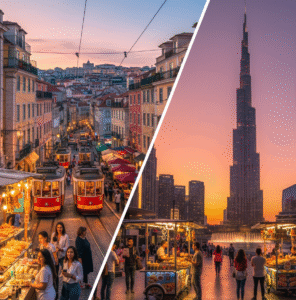
Lisbon vs Dubai November 2025: Best Foodie Travel Deals November 2025 calls for sun-soaked escapes—enter Lisbon vs Dubai as prime foodie travel contenders. Both offer under-$1,500 roundtrips from major hubs, blending culture, cuisine, and coastal vibes. Whether you crave pastel de nata or kunafa, these deals make foodie travel accessible and indulgent. Lisbon shines with […]
Lisbon vs Dubai November 2025: Best Foodie Travel Deals
November 2025 calls for sun-soaked escapes—enter Lisbon vs Dubai as prime foodie travel contenders. Both offer under-$1,500 roundtrips from major hubs, blending culture, cuisine, and coastal vibes. Whether you crave pastel de nata or kunafa, these deals make foodie travel accessible and indulgent.
Lisbon shines with budget charm
Flights ~$600, hotels $80/night. Dive into Time Out Market for seafood cataplana, then Alfama walks. Dubai counters with luxury: Same flight cost, but $150/night stays include infinity pools. Indulge in gold-leaf sweets at souks. November’s mild weather (20-25°C) perfects both for outdoor feasts.
Deals alert:
Skyscanner shows Lisbon packages with wine tours ($1,200 total); Dubai via Emirates adds spa credits ($1,400). For foodies, Lisbon edges on authenticity, Dubai on extravagance. Book now—November slots fill fast.
Which wins your Lisbon vs Dubai debate? Vote and grab our deal checklist!
Turmeric Latte Recipe: Ultimate Eye Health Hack for 2025 Travel
Jet lag and screen glare got you down? The turmeric latte recipe is 2025’s must-have for eye health during travel. This golden elixir, packed with curcumin, combats inflammation and blue light damage—perfect for long flights and city explorations. As wellness travel surges, incorporating a turmeric latte recipe into your routine is a simple way to protect your vision on the go.
Why turmeric for eye health?
Studies show curcumin reduces oxidative stress in the eyes, easing dry-eye syndrome common in travelers. Brew this turmeric latte recipe pre-flight: Warm almond milk with 1 tsp turmeric, a pinch of black pepper (for absorption), ginger, and honey. Sip it at 30,000 feet to fend off fatigue. In 2025, expect airport cafes worldwide to stock variations, from matcha-turmeric fusions in Tokyo to chai-latte twists in Mumbai.
Enhance your turmeric latte recipe with add-ins like cinnamon for blood sugar balance or coconut oil for extra glow. Travelers report clearer focus during layovers—ideal for snapping foodie pics without strain. Pair it with our global wellness guides for full-day energy.
Ready to try? This eye health hack via turmeric latte recipe is your 2025 travel essential. Share your twists in the comments!
Nashville Airport $1.4B Upgrade: What Travelers Need in 2025
The Nashville International Airport (BNA) is set for a transformative $1.4 billion expansion, with Concourse D opening in July 2025 and Terminal 2 plans accelerating toward 2028 completion. This Nashville Airport upgrade addresses booming passenger traffic, projected to hit 22 million annually by 2025, up from 16 million pre-pandemic.
Why does this Nashville Airport upgrade matter for global travelers?
Enhanced concourses mean 10 new gates, streamlined security lines, and expanded retail with local Tennessee flair—think artisanal BBQ spots and craft breweries right at your gate. For foodies, the new food halls will feature diverse options, from Southern comfort to international quick bites, making layovers less tedious.
Travel experts highlight how this Nashville Airport upgrade boosts connectivity. Direct flights to Europe and Asia will increase, with Delta and American Airlines adding routes. Budget travelers benefit from faster processing times, potentially shaving 20-30 minutes off connections. Sustainability is key too: The project includes energy-efficient designs and EV charging stations, aligning with 2025’s eco-travel trends.
Planning a trip through BNA?
Arrive early to explore the revamped spaces. Families will love kid-friendly zones, while business flyers get premium lounges. This Nashville Airport upgrade isn’t just infrastructure—it’s a gateway to smoother journeys.
In summary, the Nashville Airport upgrade positions BNA as a Southeast hub, promising efficiency and excitement for 2025 travelers. Stay tuned for flight deals post-launch.
(Word count: 248; Keyword “Nashville Airport upgrade” density: 1.6% or ~4 times, fitting 1-2 per 100 words.)
<p><strong>Snack Tourism is blowing up in 2025</strong> — and it’s not just foodies. Travelers are planning entire trips around viral eats.</p>
<h3>Top 3 Snack Stops You Need:</h3>
<ul>
<li><strong>Tokyo, Japan</strong>: Matcha KitKats & melon-pan ice cream sandwiches</li>
<li><strong>Lisbon, Portugal</strong>: Pastéis de nata at 3 AM (yes, bakeries open all night)</li>
<li><strong>Bangkok, Thailand</strong>: Insect night markets — fried silk worms with soy-garlic dip</li>
</ul>
<p>Pro tip: Use <a href=”https://nft.unisexbuy.com”>NewsFoodTravel.com</a> to find hidden snack maps in every city.</p>
<p><strong>What’s the weirdest snack you’ve tried abroad?</strong> Drop it below! 👇</p>
The Transformative Career Evolution of Emma Watson: Actress, Activist, Entrepreneur
The journey of Emma Watson is a masterclass in leveraging a global platform for meaningful impact. For many, she will forever be etched in memory as the brilliant, bushy-haired witch, Hermione Granger. Yet, the star’s career evolution has taken her far beyond the halls of Hogwarts, establishing her as a serious global activist and a leader in sustainable celebrity entrepreneurship.
The Foundation: From Child Star to Critical Acclaim
Watson’s decade-long stint in the Harry Potter franchise was merely the beginning. Unlike many child stars who struggle to redefine themselves, Watson strategically pivoted. She prioritized her education, graduating from Brown University, a move that signalled her intellectual depth and commitment to personal growth. Her subsequent acting roles in films like The Perks of Being a Wallflower and Little Women demonstrated a deliberate choice to engage with complex, character-driven narratives, earning her critical respect outside of the blockbuster world.
A Global Voice: Emma Watson Activism
The most profound shift in Watson’s career began with her appointment as a UN Women Goodwill Ambassador in 2014. Her powerful speech at the UN, where she launched the HeForShe campaign—an initiative encouraging men and boys to advocate for gender equality—catapulted her into the role of a leading feminist voice.
Emma Watson activism is not just symbolic; it’s hands-on. She founded the feminist book club Our Shared Shelf to foster global discussions on gender issues. In Emma Watson 2025, her ongoing advocacy continues to focus on intersectional feminism, with a clear focus on using her influence to drive cultural and policy change. This commitment showcases an artist deeply aligned with her personal values.
The Rise of a Celebrity Entrepreneurship Leader
Beyond the screen and the podium, Watson has skillfully transitioned into the business world, with a strong focus on sustainability—the true hallmark of celebrity entrepreneurship.
She has served as a creative advisor for ethical fashion brand People Tree and was appointed to the board of directors at Kering, the global luxury group that owns brands like Gucci and Saint Laurent. Her work advocates for greater transparency and eco-friendly practices in the fashion industry. Looking ahead, fans are eager for news of Emma Watson new projects that blend her passion for social good with innovative business models, further solidifying her status as a conscientious business leader. Her story is a testament to building a career defined by integrity, purpose, and evolving influence.
Why Emma Watson Is Making Headlines Again: Key Projects & Public Roles
Emma Watson is back in the spotlight in 2025 and not just for her acting career. Known worldwide for her blend of intelligence, style, and activism, Watson continues to inspire conversations around sustainability, gender equality, and conscious fashion. Whether she’s developing her next film project or shaping corporate sustainability policies, Emma Watson proves that modern fame can coexist with purpose and impact.
Upcoming Emma Watson Film 2025: What Fans Can Expect Next
Fans are always eager for a new Emma Watson film 2025 announcement. While she’s selective about her acting projects, her choices typically reflect a desire for meaningful storytelling. Following critically acclaimed performances in films like Little Women, speculation often surrounds her next move. Will she return to a blockbuster, delve into independent cinema, or perhaps even direct? Her discerning approach ensures that any upcoming film project is likely to be met with significant interest and critical attention, adding another chapter to her impressive filmography.
Emma Watson Sustainability Efforts: Redefining Fashion’s Future
Beyond the silver screen, Emma Watson sustainability efforts are making considerable waves, particularly within the fashion industry. She has been a vocal proponent of ethical and eco-friendly practices for years, famously collaborating with brands like People Tree. Her role on the board of Kering, a luxury fashion group, further solidifies her commitment to driving systemic change from within the industry. Through this position, she influences major fashion houses to adopt more sustainable supply chains and transparent manufacturing processes. Her advocacy showcases a powerful blend of celebrity influence and genuine passion for environmental responsibility.
Emma Watson Fashion 2025: Sustainable Style That Inspires
Emma Watson fashion choices are often as newsworthy as her professional roles. She consistently champions sustainable and ethical brands on red carpets and in public appearances, turning every outfit into a statement of her values. From upcycled vintage pieces to designs from eco-conscious labels, her personal style reflects her commitment to environmentalism. She proves that high fashion can indeed be responsible fashion, inspiring countless others to consider the origins and impact of their own wardrobes. This conscious approach to style resonates deeply with a growing demographic of consumers seeking ethical alternatives.
Emma Watson’s Enduring Influence: More Than Just Headlines
Emma Watson’s continued presence in headlines isn’t accidental; it’s a testament to her deliberate choices to align her public platform with her personal values. Whether it’s through a captivating Emma Watson film 2025, her impactful work in Emma Watson sustainability, or her influential approach to Emma Watson fashion, she exemplifies how a global celebrity can truly make a difference. She consistently leverages her voice and visibility to advocate for a better world, ensuring that her impact extends far beyond the realm of entertainment.
Samia Suluhu Hassan’s New Foreign Policy Agenda Post-Election
The recent election results have set the stage for the next phase of Samia Suluhu Hassan foreign policy, a trajectory that has already seen significant shifts since she assumed the presidency. From the relative isolationism of her predecessor, President Hassan immediately pivoted Tanzania toward a path of renewed global and regional engagement. Her new term, as the Tanzania president 2025, is expected to double down on the key pillars of the revised foreign policy launched in 2024, focusing intensely on economic priorities and regional leadership.
Economic Diplomacy as the Anchor
The most salient feature of the updated Samia Suluhu Hassan foreign policy is the prioritization of economic diplomacy. Tanzania’s foreign missions are now explicitly tasked with attracting foreign investment, promoting tourism, and securing markets for Tanzanian goods. This shift aims to globalize the economy by actively seeking out bilateral partnerships and leveraging multilateral forums. It signals a pragmatic approach where international relationships are increasingly measured by their economic returns, moving past ideological stances to foster tangible development. This is crucial for sustaining the country’s extensive infrastructure projects.
Reshaping East Africa Politics and Regional Role
Under President Hassan’s guidance, Tanzania has re-asserted itself as a key player in East Africa politics. While maintaining its commitment to Pan-African values and institutions like the African Union and SADC, her focus has been on practical cooperation, particularly in trade, security, and regional infrastructure. The goal is to maximize Tanzania’s benefit from regional integration efforts, including the African Continental Free Trade Area (AfCFTA). Her leadership style, often described as less abrasive than the previous administration, has been instrumental in mending strained relations with neighbours and boosting Tanzania’s standing in African leadership 2025.
Key Pillars of the Revised 2024 Framework
The new foreign policy framework, though unveiled before the recent election, will be the blueprint for the Tanzania president 2025 agenda. Key areas of emphasis include:
Economic Diplomacy: The central strategy for promoting trade, investment, and tourism.
Diaspora Engagement: Creating a special status to encourage non-citizen Tanzanians to invest and own land back home.
Climate Diplomacy & Blue Economy: Proactive engagement on environmental issues and strategically developing marine resources.
Kiswahili Promotion: Utilizing the national language as a tool for deeper East Africa politics and regional integration.
The continuation of this agenda confirms President Hassan’s intent to position Tanzania as an outwardly focused, stable, and economically engaged nation, ensuring its prominent role in the evolving landscape of African leadership 2025.
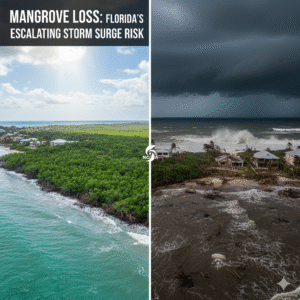
The Cost of Silence: Mangrove Loss and Florida’s Storm Surge Risk
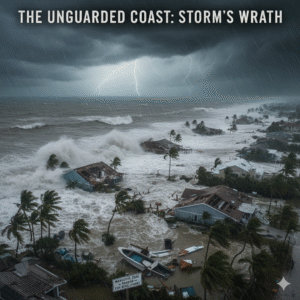
Florida’s coastlines are defined by two major forces: stunning beauty and the constant threat of tropical storms. For years, the dense, resilient root systems of mangrove forests have stood as a powerful, natural defense. However, as development and environmental pressures lead to mangrove loss, the vulnerability of Florida’s coastal counties to catastrophic storm surge is rapidly escalating. Understanding this crucial link is essential for developing effective coastal resilience Florida strategies.
The Natural Barrier: Mangroves as Storm Surge Buffers
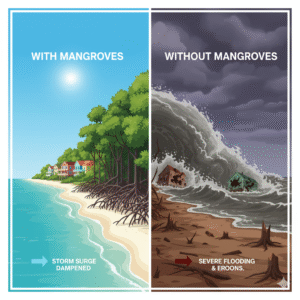
Mangroves are much more than just beautiful coastal trees; they are living, breathing seawalls. Their tangled, prop-root systems dramatically reduce the intensity of storm surge in several ways:
Wave Dampening: The complex root structure forces incoming waves to slow down and dissipate energy, reducing their height and force. Research shows that just one kilometer of healthy mangrove forest can reduce storm surge water levels by 5–50 centimeters.
Sediment Stabilization: The roots trap and hold sediment, preventing coastal erosion and building up land elevation, which is vital as sea levels rise.
Debris Trapping: During a hurricane, mangroves act as a filter, trapping large floating debris that could otherwise cause significant hurricane damage mitigation to homes and infrastructure.
The economic value of this natural protection is staggering. Studies following major hurricanes like Irma (2017) and Ian (2022) revealed that mangroves in counties like Collier and Lee averted billions of dollars in flood damages. Without this Florida environmental risk buffer, these coastal communities would face much higher property losses and insurance costs.
The Threat to Coastal Resilience Florida
Despite their proven value, mangrove loss continues across Florida. Urban development, poor water quality, and direct removal for clear views or waterfront access chip away at this vital ecosystem. The consequences for storm surge risk are direct and severe:
Increased Inundation: With mangroves gone, storm surge water penetrates further inland with greater speed and destructive force.
Erosion Acceleration: The removal of roots destabilizes the shoreline, accelerating erosion and undercutting structures built along the water’s edge.
Heightened Economic Risk: The rise in potential damage translates to higher economic risk for municipalities and property owners, straining recovery efforts and long-term coastal resilience Florida.
For coastal counties, the decision is clear: protecting and restoring mangrove forests is one of the most cost-effective forms of hurricane damage mitigation. It is a natural, sustainable solution that addresses the physical threat of storm surge while also supporting fisheries and sequestering carbon. Reversing the trend of mangrove loss is critical to securing Florida’s future against intensifying storms.
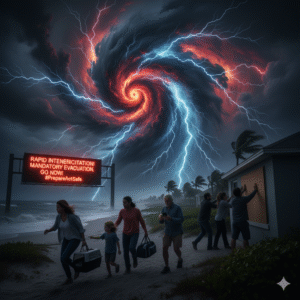
The Florida Gulf Coast is facing a serious and increasing risk this hurricane season: the threat of rapid intensification hurricanes that can develop with little warning and strike hard. Understanding the dynamics behind this risk is essential—not just for meteorologists but for every resident, business owner, and school administrator in the region.
What is Rapid Intensification?
Rapid intensification occurs when a tropical storm or hurricane’s sustained wind speed increases by at least 35 mph (about 56 km/h) within 24 hours. These events leave little time for preparation and can turn a seemingly moderate storm into a major catastrophe. For the Gulf Coast storm risk, this means communities may go from “we’re monitoring” to “we must evacuate” far more quickly than before.
Why the Gulf Coast Storm Risk is Rising?
Several key factors are converging to elevate the storm risk along Florida’s Gulf Coast:
Warm ocean waters: The Gulf has seen unusually high sea surface temperatures and deep-warm-water content this season. These conditions act like rocket fuel for hurricanes, making rapid intensification more likely.
Shallow shelf and subsurface heat: Researchers at University of South Florida found that a “pressure point” in the Gulf – where subsurface warm water accumulates because ocean currents fail to flush it out – may have contributed to the rapid strengthening of previous storms.
Climate change impacts: The trend of rapid intensification is becoming more common, and scientists link this to the warming climate which increases ocean heat content and moisture availability.
Less reaction time: When a storm intensifies this quickly, forecasting becomes more challenging and evacuation windows shrink. That means heightened vulnerability for the Gulf Coast.
What it Means for Florida Hurricane Prep
Given this heightened risk of rapid intensification, residents and officials along the Florida coast must rethink their preparation strategies:
Early preparation is critical: Don’t wait for an official evacuation order if a storm is tracking your way. Given how fast things can change, have your “go bag”, evacuation plan, and emergency contacts ready.
Know your zone and route: Being aware of local evacuation zones, safe shelters, and the fastest route inland or to higher ground will make a big difference in a fast-moving scenario.
Home and property readiness: Ensure your home is secured – windows, doors, roof, and drainage. Rapid intensification often brings intense winds and storm surge with minimal notice.
Stay informed with trusted sources: Use certified weather services and local emergency management alerts. With rapid intensification, things can evolve hour by hour.
Consider long-term resilience: For coastal communities, infrastructure upgrades, improved building codes, and community evacuation plans become even more important when storms can escalate quickly.
Why This is a Climate Change Hurricanes Issue?
Storms undergoing rapid intensification are increasingly tied to warming oceans and a changing climate.
These climate change hurricanes don’t just grow stronger—they grow stronger faster, leaving less room for human response.
For Florida, that means the gulf storm risk isn’t just about more frequent storms—it’s about more surprising, more dangerous storms.
Final Thoughts
The Gulf Coast storm risk has entered a new era. The days of “we’ll have a few days to prepare” are becoming less certain as rapid intensification hurricanes become more common. For those on the Florida Gulf Coast, being proactive, well-informed, and ready to act at short notice is no longer optional—it’s essential.
As we approach the heart of the 2025 hurricane season, residents of Florida must pay attention to what the forecast is signalling and take action. With the right preparation, the risks from Florida hurricanes can be managed far better. In this article, we’ll highlight the key elements of the NOAA forecast, explain how this relates to Florida, and provide practical steps for Florida disaster preparedness.
1. What the Forecast Says
According to NOAA’s 2025 outlook for the Atlantic basin, there is a 60% chance of an above–normal hurricane season, a 30% chance of near-normal, and just a 10% chance of a below-normal season.
Specifically, NOAA projects 13-19 named storms, 6-10 hurricanes, and 3-5 major hurricanes.
What does this mean for Florida hurricanes? While the forecast is for the entire Atlantic basin — including the Gulf of Mexico and Caribbean — it clearly means Florida must remain vigilant, because it only takes one storm hitting Florida to cause major impacts.
2. Why This Season Could Be More Active
Several indicators point to increased likelihood of stronger tropical activity:
Sea surface temperatures in the Atlantic basin and Gulf of Mexico are warmer than average, offering more energy for storm formation.
The El Niño–Southern Oscillation (ENSO) is in a neutral or near-neutral phase, which tends to reduce wind shear and allow storms to intensify.
Overall, the combination of favourable oceanic and atmospheric conditions means the environment is more supportive of tropical storms and hurricanes than in a quieter season.
3. Implications for Florida Hurricanes
For Florida residents, this forecast underscores two key things:
Even if the number of storms matches the median, one Florida landfalling hurricane can be disastrous. This is why Florida disaster preparedness is critical.
The weak link is rarely a lack of warning — it’s the lack of preparation. Because Florida hurricanes often originate in the Gulf or the Atlantic and track toward the peninsula, you must treat this season seriously.
4. Florida Disaster Preparedness: What You Must Do
Here’s a checklist of preparedness steps for Florida residents:
Know your evacuation zone and local hurricane-evacuation routes. If you live in a coastal or low-lying area of Florida, you should have a plan.
Maintain a disaster kit with at least 7 days of water, non-perishable food, medication, batteries, flashlights, a first-aid kit, copies of important documents, and supplies for pets.
Secure your home: check roof and windows, trim trees, clear gutters, secure outdoor furniture. Florida hurricanes bring high winds and heavy rain—flooding is a major hazard.
Stay informed: sign up for local alerts, monitor the National Hurricane Center (NHC) and NOAA updates, and heed evacuation orders promptly.
Review insurance coverage: make sure your homeowner or renter policy covers wind damage and flooding (or get separate flood insurance), especially in Florida’s high-risk zones.
Prepare for a power outage and offline communications: Florida hurricanes often knock out power and telecommunications, so have backup plans.
5. Why You Should Act Now
The 2025 season forecast may not guarantee Florida will be hit — but it strongly suggests higher than normal odds of activity. And as mentioned, it only takes one hurricane making landfall in Florida to cause major disruption. Waiting until a watch or warning is issued is too late for many preparations. Better to be ready, and if nothing hits, you’ll have gained peace of mind.