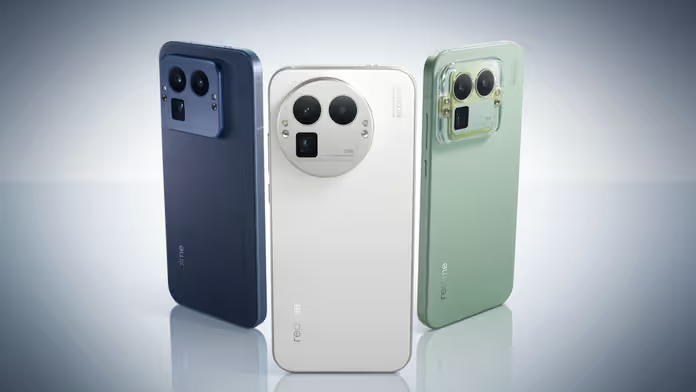
Realme GT 8 Pro Launch Snapdragon 8 Elite Powerhouse
202516+
The Realme GT 8 Pro has officially launched in India on November 20, 2025, and it’s easily one of the most ambitious flagship releases of the year. Packed with the Snapdragon 8 Elite Gen 5 chipset, a Ricoh-engineered camera system, and a massive 7,000mAh battery, the GT 8 Pro challenges every major premium phone in […]
The Realme GT 8 Pro has officially launched in India on November 20, 2025, and it’s easily one of the most ambitious flagship releases of the year. Packed with the Snapdragon 8 Elite Gen 5 chipset, a Ricoh-engineered camera system, and a massive 7,000mAh battery, the GT 8 Pro challenges every major premium phone in its segment.
Starting at ₹49,999 for the 12GB + 256GB variant, Realme is clearly targeting creators, mobile photographers, and gamers who want desktop-level performance in a sleek pocket-sized machine.
A Camera-Centric Flagship with Ricoh GR Magic
First unveiled in China in October 2025, the GT 8 Pro gained global attention upon its India debut—mainly because of its Ricoh GR collaboration, a first for any smartphone.
The device features:
50MP Ricoh GR main sensor with anti-glare coating
Dedicated GR Mode for film-like, natural color science
50MP ultrawide lens for landscape and travel shots
32MP front camera with 4K video support
This setup makes the GT 8 Pro a street photography beast, and early samples online show stunning low-light performance, true-to-life skin tones, and crisp zoom clarity.
Performance: Snapdragon 8 Elite + HyperVision AI Chip
Under the hood, the Realme GT 8 Pro packs:
Snapdragon 8 Elite Gen 5 (45% faster CPU than Gen 4)
Up to 16GB LPDDR5X RAM
Up to 1TB UFS 4.0 storage
Realme UI 6.0 (Android 15)
HyperVision AI chip for image enhancement, gesture controls & scene detection
Realme promises 4 years of OS updates and 5 years of security support, making it a reliable long-term device.
Gamers will appreciate the 144Hz LTPO 2K display, 7,000 nits peak brightness, and rapid touch response, while multitaskers can enjoy lightning-fast app switching.
Internet Reactions: A Hit Already
“Ricoh cameras on a phone? Absolute game-changer!” – @TechEnthusiastIN Tech fans are loving the collaboration, and memes about the swappable camera backs have taken over X, calling it “Lego for photographers.”
Against competitors like OnePlus 13R (₹50,000) and iQOO 13 (₹55,000), the GT 8 Pro holds a strong advantage with its:
120W fast charging (0–100% in 30 minutes)
50W wireless charging
IP69 rating (rain, dust, and splash resistant)
For travelers, the 7,000mAh battery comfortably delivers 2 days of heavy usage, making it a serious workhorse.
5 Reasons Why the Realme GT 8 Pro Is 2025’s Camera King
Ricoh GR Main Camera Beautiful film-like tones, anti-glare lens, and unmatched street photography output.
200MP Periscope Zoom Capture distant details—perfect for concerts, wildlife, or street markets.
HyperVision AI Engine Real-time scene tuning for deserts, monsoons, neon lights, and low light.
Swappable Camera Modules Customize your setup for portraits, wide-angle travel shots, or food vlogs.
Brilliant 144Hz 2K Display Edit photos, color-grade videos, or watch HDR content—even under harsh sunlight.
Final Verdict: A Creative Powerhouse at ₹49,999
The Realme GT 8 Pro is more than a smartphone—it’s a creator’s toolkit, a travel companion, and a gaming machine, all wrapped in one premium device. If you’re someone who loves photography, travels often, or creates content daily, this flagship is an excellent choice.
Which feature impressed you the most? Tell us in the comments!
In 2025 we are witnessing how the future of news tech is shifting the landscape of journalism. Big-event digital reporting is no longer simply about being on-site with a notepad; instead, technology journalism and AI news coverage 2025 are now tightly interwoven. As major events unfold—sports finals, political summits, global festivals—the way reporters cover them is evolving rapidly thanks to advances in artificial intelligence and digital tools.
Real-Time Coverage Powered by AI
One of the clearest ways AI news coverage 2025 is changing big-event news is through real-time automation and data-driven updates. Newsrooms are leveraging generative AI to draft summaries, monitor live data streams, and flag breaking trends. For example, a recent report shows that 77 % of publishers in 2025 see AI-assisted content creation as critical, though typically under human oversight.
This means for big-event digital reporting, technology journalism is becoming more about workflows, pipelines and machine-human collaboration rather than just boots-on-the-ground.
Customized and Multiplatform Storytelling
Technology journalism is also being reshaped by AI tools that enable localization, personalization and multi-format delivery. In regions such as India, the convergence of AI and journalism supports vernacular media, automated transcription, voice assistants and summarization — widening access to big-event digital reporting.
This means that when major events occur, the story isn’t just chased but also delivered in formats tailored for mobile, voice, local languages and social media. The result: broader reach, faster spread, and a shift in how audiences consume coverage of large-scale events.
Speed, Scale — and the Ethics Challenge
With these technological advances comes a set of pressing questions for AI news coverage 2025. While automation allows reporters to scale coverage and cover multiple angles, concerns around transparency, trust and accuracy mount. A recent global survey found only 12 % of respondents were comfortable with news created entirely by AI; that figure rose when humans remained involved.
In the realm of big-event digital reporting, this matters because missteps or bias can spread rapidly. Technology journalism needs to balance speed and accessibility with integrity and editorial oversight.
Data Analytics & Predictive Reporting
Another frontier for the future of news tech is predictive analytics and data-driven insights around big events. AI is no longer just summarizing what’s happened — it’s spotting patterns, generating story ideas and surfacing angles before others do. For instance, hybrid workflows where AI drafts bullets or detects themes allow journalists to focus on deeper investigation.
In coverage of major gatherings (e.g., global summits, sports championships), this means newsrooms can map audience reactions, social-media sentiment, geolocate incidents and craft stories that anticipate follow-through rather than react.
What This Means for Major Event Audiences
For consumers of big-event news, the changes are tangible:
Coverage appears faster, with updates streaming across platforms and formats.
Stories are more tailored: local languages, voice formats, personalized alerts.
You may not always know whether an article was partly generated by AI — raising questions about transparency.
The variety of perspectives grows, as AI helps journalists scale beyond singular beat coverage.
From the vantage of technology journalism and AI news coverage 2025, this means that staying informed about major events is both easier and more complex — easier because the tools deliver more, but complex because you must evaluate credibility and source.
Challenges & The Road Ahead
Despite the promise, several hurdles remain for big-event digital reporting and technology journalism:
Transparency: Many newsrooms still do not clearly disclose AI’s role in content creation.
Bias & Trust: Even well-trained AI can replicate or amplify bias, and the public remains cautious of AI-only stories.
Access & Equity: Smaller or regional newsrooms may lack the infrastructure to harness these tools fully.
Ethical Boundaries: What tasks should AI handle vs. what should remain human-led in covering big events?
As the future of news tech unfolds, the successful newsrooms will be those that integrate AI thoughtfully, emphasise human judgement, and maintain trust — especially in the high-stakes environment of major events.
Conclusion – A New Chapter for Big-Event Coverage
In sum, the era of big-event digital reporting is entering a new chapter shaped by technology journalism and AI news coverage 2025. With faster delivery, personalized formats and advanced analytics, the way we cover and consume major events has transformed. Yet this transformation brings serious questions of ethics, access and transparency. For audiences and journalists alike, adapting to this shift means embracing the tools — and holding them accountable.
As big events continue to unfold on the global stage, keep an eye on how AI and journalism evolve together. The story behind the story is as important as the story itself.
The Bulletin of the Atomic Scientists has set the Doomsday Clock to 89 seconds before midnight in 2025, marking the closest approach to global catastrophe since its creation in 1947. This adjustment underscores escalating threats to international security.
Factors Leading to the Doomsday Clock’s Adjustment
Several critical issues have influenced this decision:
Nuclear Threats: The ongoing conflict in Ukraine has heightened concerns over nuclear escalation, with Russia’s aggressive actions and nuclear rhetoric contributing to global instability.
Climate Change: Despite increased investments in low-carbon energy, the acceleration of climate change remains a significant concern. The year 2024 was recorded as the hottest year to date, emphasizing the urgency for effective climate action.
Emerging Technologies: Rapid advancements in artificial intelligence and biotechnology present dual-use dilemmas, where beneficial technologies could be repurposed for harmful applications, posing new security challenges.
The adjustment of the Doomsday Clock serves as a stark warning about the precarious state of global security. It emphasizes the need for immediate and coordinated international efforts to address these existential threats. Without decisive action, the probability of global disaster increases, underscoring the critical importance of global cooperation and proactive policy measures.
In a groundbreaking development, Chinese startup DeepSeek has unveiled an AI assistant that is poised to disrupt the artificial intelligence landscape, challenging industry giants like Nvidia. This innovation has not only showcased China’s rapid advancements in AI but has also sent ripples through global tech markets.
DeepSeek’s AI Assistant: A New Contender
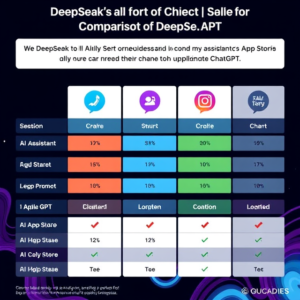
Launched recently, DeepSeek’s AI assistant has quickly become the most downloaded free app on Apple’s iPhone store, surpassing established competitors like OpenAI’s ChatGPT. This rapid ascent has raised eyebrows in the U.S. tech industry, particularly due to DeepSeek’s cost-effective approach to AI development.
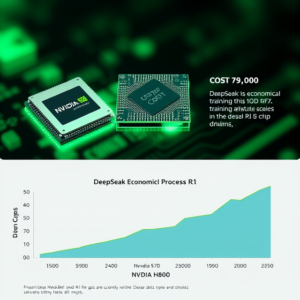
DeepSeek’s AI model, named R1, demonstrates advanced reasoning capabilities while maintaining cost efficiency. Remarkably, the company achieved this by utilizing Nvidia’s lower-performance H800 chips, keeping training costs under $6 million—a fraction of the expenditure by U.S. tech giants. This approach challenges the prevailing notion that cutting-edge AI development necessitates substantial financial and computational resources.
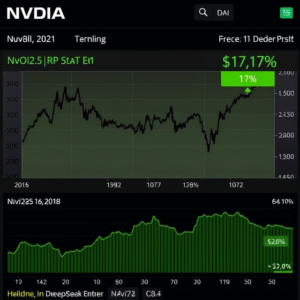
The debut of DeepSeek’s AI assistant has had immediate financial repercussions. Nvidia, heavily reliant on AI chip demand, experienced a significant stock decline, with a 17% drop in market value. This event has prompted a reevaluation of AI infrastructure investments and raised concerns about the future demand for high-end AI chips.
DeepSeek’s success has ignited discussions about the evolving dynamics of the AI industry. By leveraging open-source models and innovative scaling techniques, the startup has positioned itself as a formidable competitor to U.S. AI companies. This development underscores the shifting balance in AI innovation and the potential for emerging players to disrupt established market leaders.
DeepSeek’s AI breakthrough exemplifies the rapid advancements in AI technology and highlights the potential for startups to challenge industry incumbents. As the AI landscape continues to evolve, the emergence of cost-effective and efficient models like DeepSeek’s R1 may redefine the competitive dynamics of the tech industry.